
Struggling to choose the right solar street light? Many focus on price and wattage, only to face poor lighting and costly replacements later. It's a common, expensive mistake.
To choose the right all-in-one solar street light, start with your project details: road width, pole height, and pole spacing. These factors determine the required lumen output and light distribution, not wattage. This ensures you get effective lighting that meets your needs and avoids future problems.1
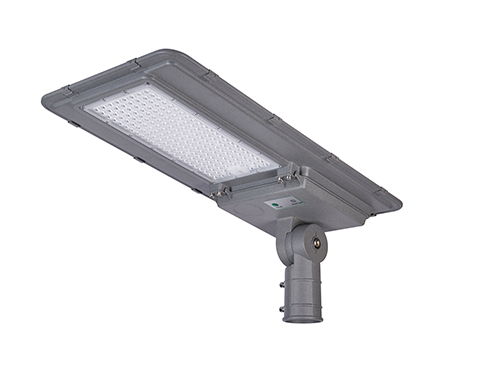
In my years of exporting lights, I've seen many buyers start a conversation with "I need a 100W light" or "What's your lowest price?" It's a natural starting point, but it often leads to buying a product that doesn't work. A light that looks good on paper can fail completely on the actual road. This guide will help you ask better questions from the start, so you can find a solution that is both effective and truly cost-efficient. Let's dive into the most common pitfalls and how to avoid them.
Why Does Starting with Wattage and Price Lead to Problems?
Found a great price on a high-wattage solar street light? It feels like a win, but this focus often leads to uneven lighting and unhappy project stakeholders.
Wattage only tells you how much power a light consumes, not how much light it produces (lumens)2 or where it directs that light (optics). A cheaper, high-wattage light can be less efficient and provide worse illumination than a properly designed, lower-wattage alternative from a quality supplier.
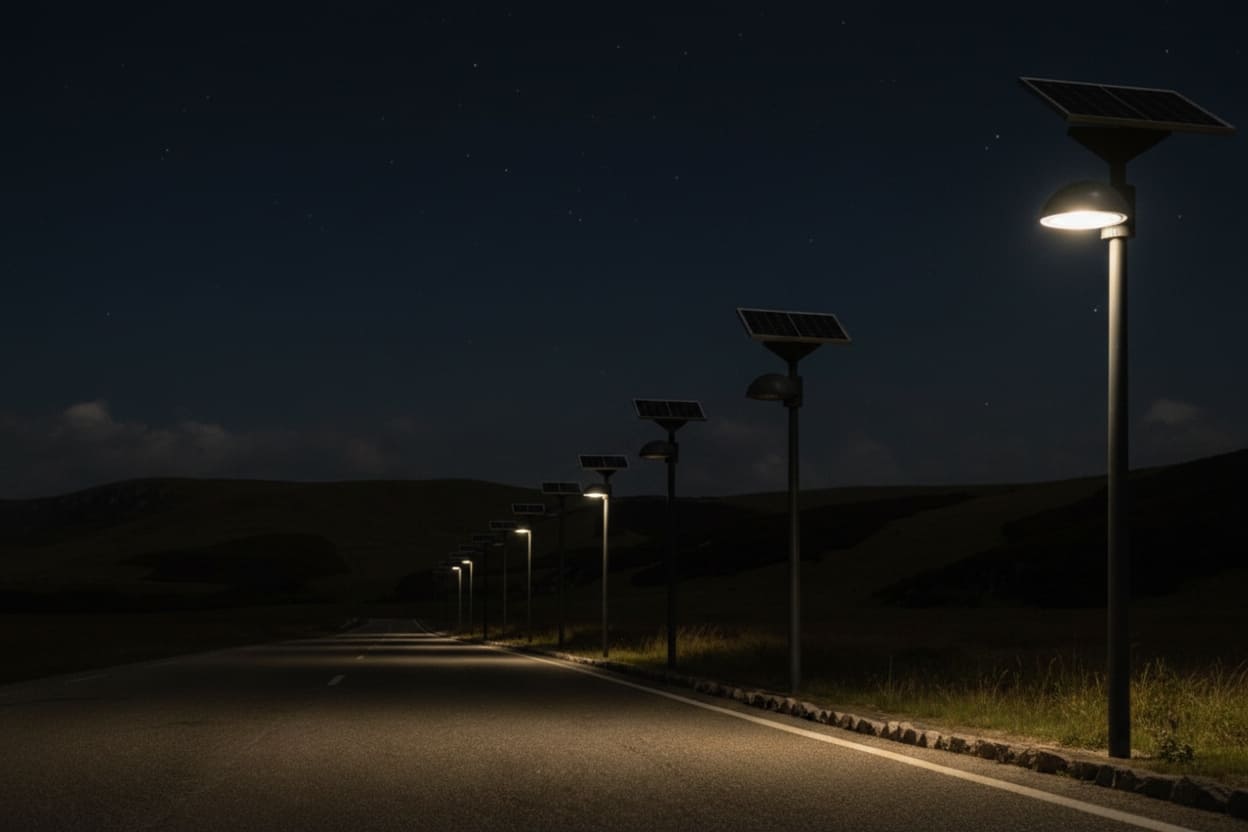
When I receive an inquiry that only asks for a price on a 150W solar street light, I know the buyer might be heading for trouble. It's my job to help them step back and look at the bigger picture. Focusing on wattage is a habit from the old days of traditional lighting, but with modern LEDs and solar technology, it's an outdated approach. Two lights with the same wattage can have completely different performance levels3, leading to significant issues down the line.
Wattage vs. Lumens: What's the Real Measure of Brightness?
The most important metric for brightness is lumens (lm), not watts (W).4 Lumens measure the total amount of visible light emitted by a source. Wattage simply measures energy consumption. A high-quality, efficient LED chip can produce a lot of lumens with very few watts. A low-quality chip might consume many watts but produce very little usable light. For example, one factory's 80W light might produce 12,000 lumens, while another's 80W light only produces 8,000 lumens. They consume the same power, but one is 50% brighter. This is why you must always compare lumen output first.
The Hidden Costs of a "Cheap" Light
A low initial price is tempting, but it almost always leads to higher long-term costs. A cheap light might use a low-capacity battery that can't last through a few cloudy days, or it might have poor heat dissipation, causing the LEDs to fail prematurely5. This results in complaints, expensive maintenance trips, and the cost of replacement units. A quality light costs more upfront but saves you money and protects your reputation.
| Feature | Low-Price Focus | Performance Focus |
|---|---|---|
| Initial Cost | Low | Higher |
| Light Quality | Poor, dark spots | Even, consistent |
| Maintenance | Frequent replacements | Minimal, reliable |
| Project Success | Risk of failure, complaints | Meets requirements |
| Long-Term Cost | High (replacements, labor) | Lower (reliability) |
What Project Details Should I Provide to a Supplier?
Unsure what information to give your supplier? Vague requests get vague quotes, wasting time and leading to unsuitable products that don't fit your project needs.
Always provide your supplier with these key details: road width, pole height, and distance between poles. Also include the required lighting level.6 This information allows them to recommend the most suitable and cost-effective solution for your specific application.
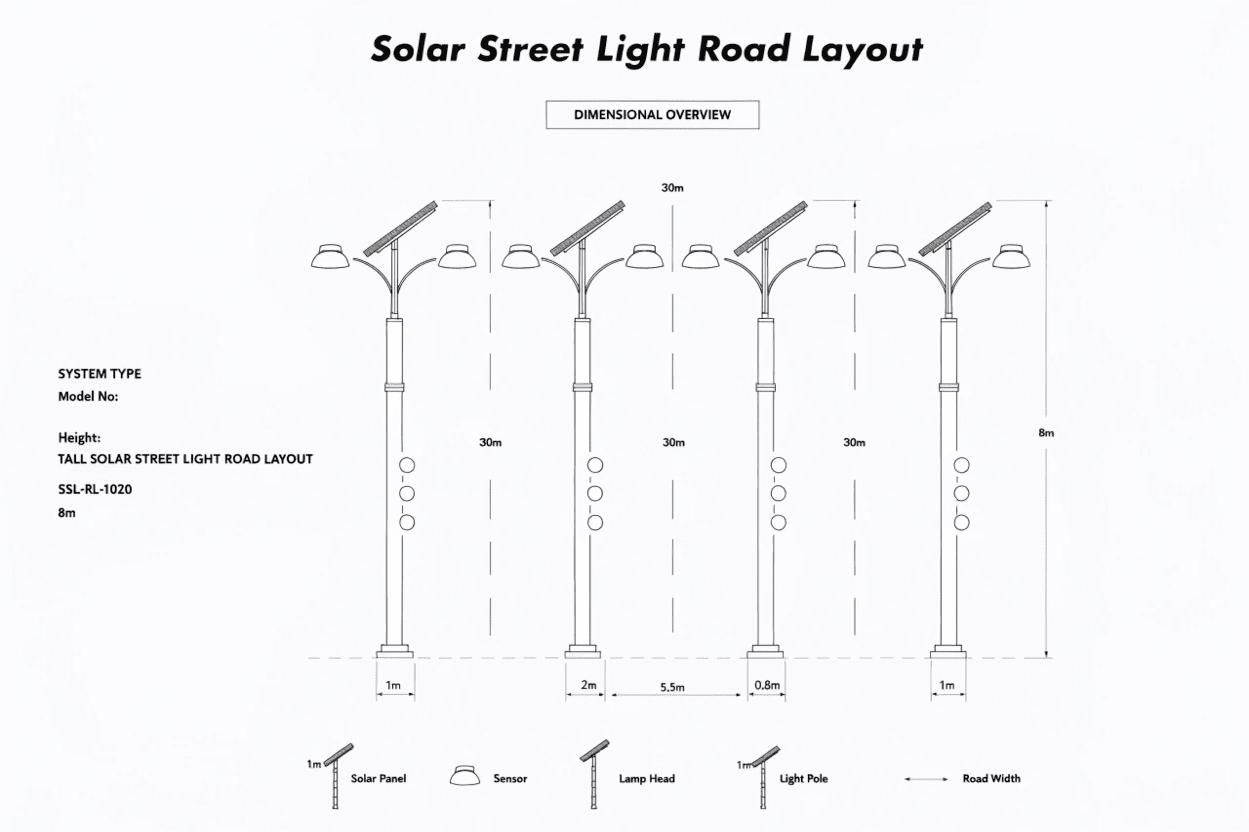
The best conversations I have with customers start with them telling me about their project. When a buyer from Ghana explained he needed to light a 7-meter wide road with 6-meter poles spaced 25 meters apart, I could immediately recommend a specific product with the right optics and lumen package. This is much more effective than going back and forth on price for a generic "100W" light. Providing clear project details saves everyone time and ensures you get a product that actually works.
The "Big Three" for Any Street Light Project
These three measurements are the foundation for any good lighting recommendation.
- Pole Height: This is critical because it determines how wide an area a single light can cover. A taller pole requires a light with higher lumen output and a wider light distribution pattern to illuminate the ground effectively.7
- Pole Spacing: The distance between your poles dictates whether the light from one pole will reach the next, preventing dangerous dark spots in between.8 If poles are far apart, you need a light with optics designed for long-reach illumination.
- Road Width: The light needs to cover the entire road surface, and often the sidewalks too. A wide road requires a specific lens type (light distribution pattern) to push the light out sideways instead of just straight down.
Environmental Factors You Can't Ignore
For all-in-one solar street lights, the local environment is just as important.
- Local Sunlight Conditions: How many hours of strong, direct sunlight do you get per day? This determines the size of the solar panel needed to fully charge the battery.9
- Autonomy Requirement: How many rainy or cloudy days in a row does the light need to operate? This dictates the required battery capacity.10 A project in Nigeria might need 2-3 days of autonomy.
| Project Factor | Why It Matters | Example |
|---|---|---|
| Road Width | Determines the necessary light beam angle (optics). | 7-meter wide two-lane road |
| Pole Height | Affects light coverage and intensity on the ground. | 6-meter high poles |
| Pole Spacing | Prevents dark spots between lights. | Poles are 25 meters apart |
| Rainy Days | Determines required battery capacity for autonomy. | Need 3 days of backup power |
How Do I Compare Different All-In-One Solar Street Lights Fairly?
Juggling quotes from different suppliers? Datasheets can be confusing and misleading, making it hard to know if you're truly comparing apples to apples.
To compare fairly, look beyond price and wattage. Evaluate key performance specs: total lumen output, battery capacity (Ah) and type (LiFePO4 is best), solar panel power, IP/IK ratings for durability, and the warranty terms. These details reveal the true quality.

A buyer from Portugal once sent me two quotes. One was much cheaper, but when we looked closer, we found the cheaper light used a smaller battery and had no IP rating listed. It would have failed within the first year in their coastal environment. The datasheet tells a story, but you have to know how to read it. Focusing on the right specifications helps you identify the product that offers the best long-term value, not just the lowest initial price.
Deconstructing the Datasheet
Here are the key terms you must check to make a fair comparison.
- Lumen Output (lm): This is the true measure of brightness. Insist on this number, not just wattage.
- Battery Type & Capacity (Ah): This is the heart of the system. Look for LiFePO4 (Lithium Iron Phosphate) batteries, as they offer a much longer lifespan and better safety than older technologies.11 Capacity (in Amp-hours or Watt-hours) tells you how much energy it can store. More is better for longer autonomy.
- Solar Panel (Wp): The panel's peak wattage (Wp) indicates how quickly it can charge the battery. An undersized panel will never fully charge the battery, leading to dim lights at night.
- IP/IK Ratings: The IP rating (e.g., IP65) shows its resistance to dust and water. The IK rating (e.g., IK08) shows its resistance to physical impacts.12 Higher numbers mean a more durable product.
The Importance of Warranty and Supplier Support
A long warranty is a sign of a manufacturer's confidence in their product. A 3- or 5-year warranty suggests they use high-quality components. But the warranty is only as good as the company offering it. In my experience, it's crucial to work with a supplier who provides clear after-sales support. Ask them: "What is your process if a unit fails under warranty?" A reliable partner will stand behind their product and help you resolve issues, which is essential for maintaining your own business reputation.
| Specification | Supplier A | Supplier B | My Requirement |
|---|---|---|---|
| Lumen Output | 10,000 lm | 12,000 lm | >12,000 lm |
| Battery Type | Lithium-ion | LiFePO4 | LiFePO4 |
| Battery Capacity | 25Ah | 35Ah | >30Ah |
| Solar Panel Power | 40W | 55W | >50W |
| IP/IK Rating | IP65/IK07 | IP66/IK08 | IP65/IK08 |
| Warranty | 2 Years | 3 Years | 3+ Years |
Conclusion
To summarize, buying the right solar street light starts with your project, not the price tag. Focus on your needs, ask suppliers the right questions, and compare products fairly.
A roadway lighting design standard or government handbook can confirm that fixture placement, mounting height, road geometry, and required lighting levels drive proper street-light selection. ↩
A standards or educational source can verify that watts are a unit of power and lumens are a measure of luminous flux. ↩
Evidence on LED luminous efficacy can show why equal wattage does not guarantee equal lumen output or lighting performance. ↩
Government or energy-efficiency guidance can support the recommendation to compare lamp brightness by lumens rather than wattage. ↩
A technical paper or government lighting resource can confirm that elevated LED junction temperatures reduce lumen maintenance and reliability. ↩
Roadway lighting standards and handbooks can substantiate that geometric layout and target illuminance/luminance are core design parameters. ↩
Lighting design references can explain how mounting height changes coverage area, illuminance, and optical distribution requirements. ↩
Roadway lighting guidance can support that spacing influences uniformity ratios and gaps in illumination. ↩
PV sizing resources can confirm that available solar irradiance or peak sun hours determine module capacity needed to recharge batteries. ↩
Off-grid PV design guidance can verify that required days of autonomy are used to calculate battery storage capacity. ↩
Battery research or university sources can support claims about LiFePO4 thermal stability, safety, and cycle-life advantages. ↩
IEC standard references or neutral summaries can verify what IP and IK ratings measure and how they relate to product durability. ↩